|
|
|
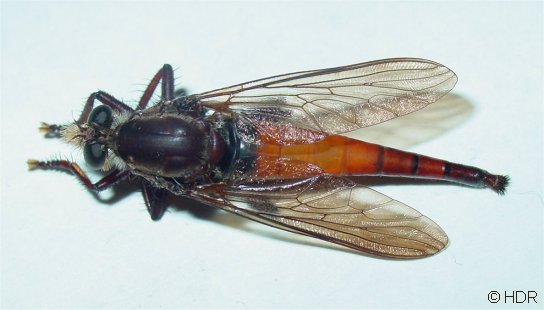
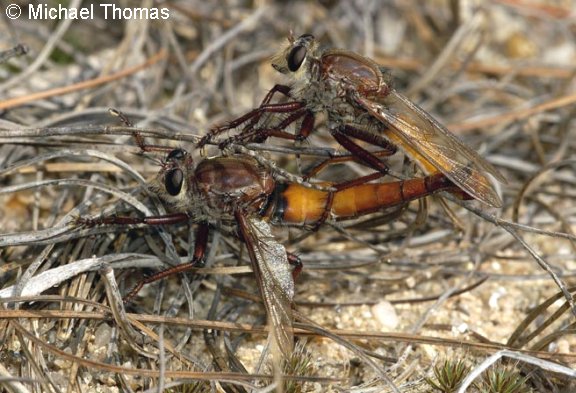
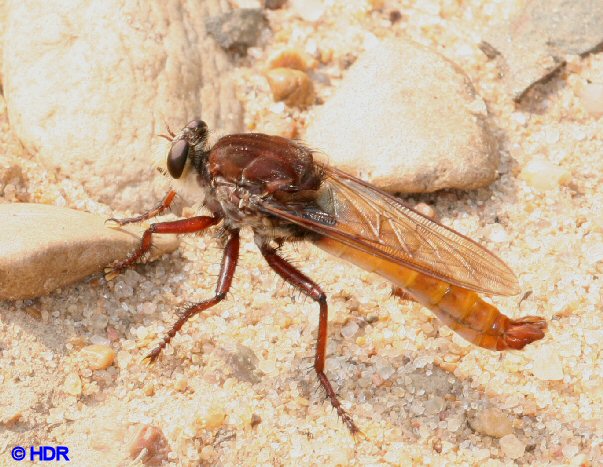
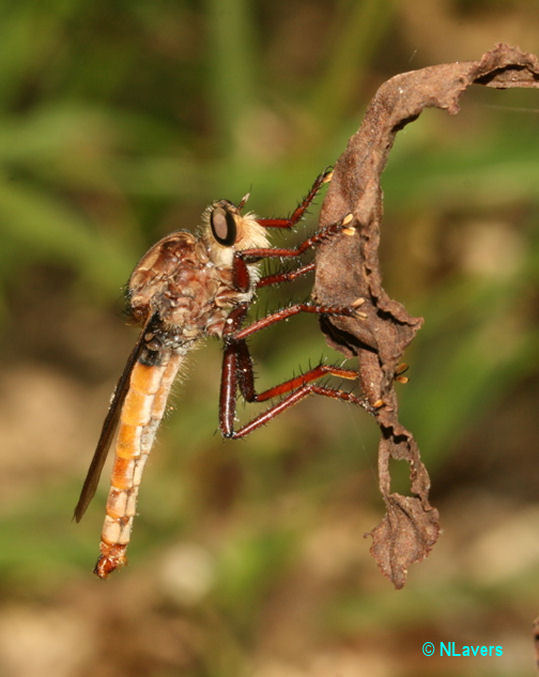
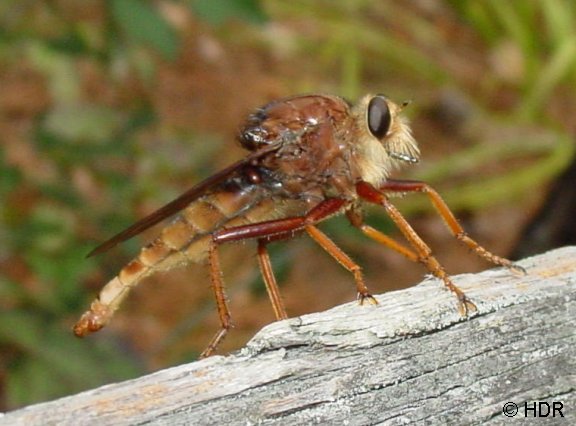
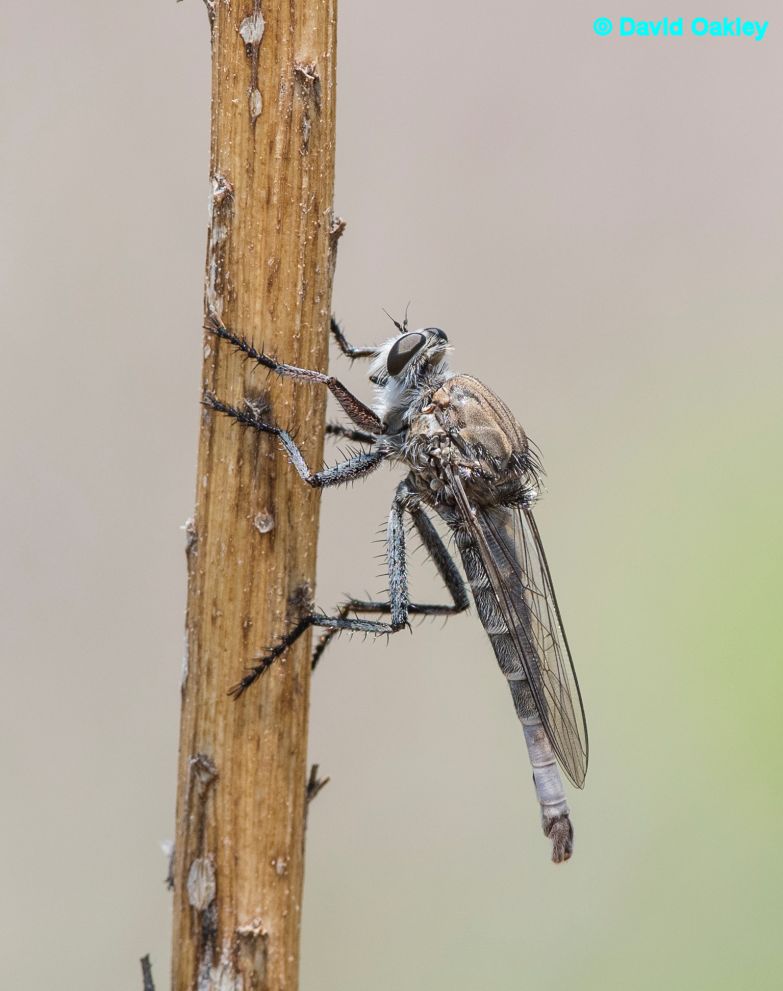
The Proctacanthus species are large and aggressive robbers. Some appear to be the most aggressive feeders we have, right up there with the vicious Promachus. Butterflies seem to be a favorite food. This is Proctacanthus duryi and it is a medium length, pale, apparently sand-loving species. So far I have only found it on river sand but who knows. We have seven species of Proctacanthus. This is a male. Compare with Michael Thomas' shot of P. heros from Georgia which possibly occurs here as well but has presently been found in Kentucky and Mississippi and no closer. It is a much larger and redder species. (See shot below.) |
|
|
|
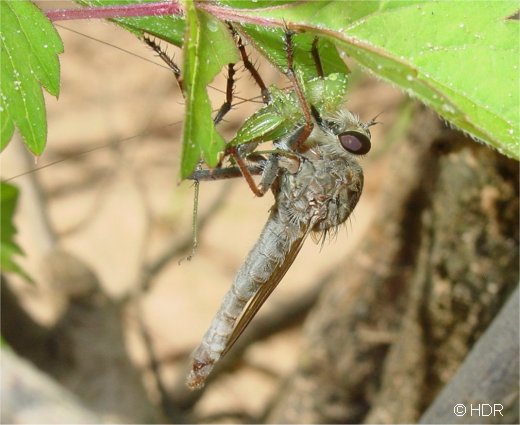
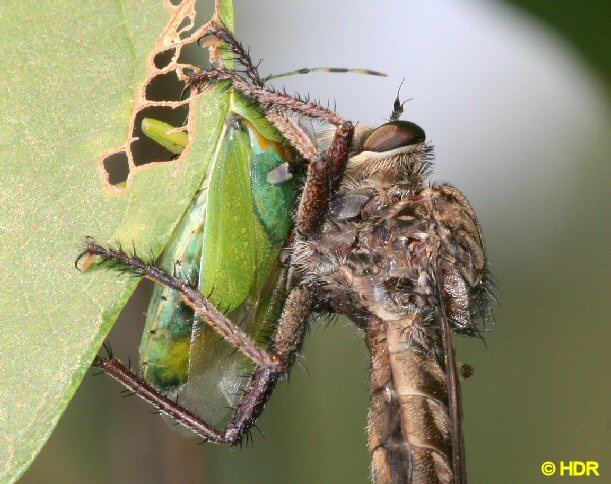
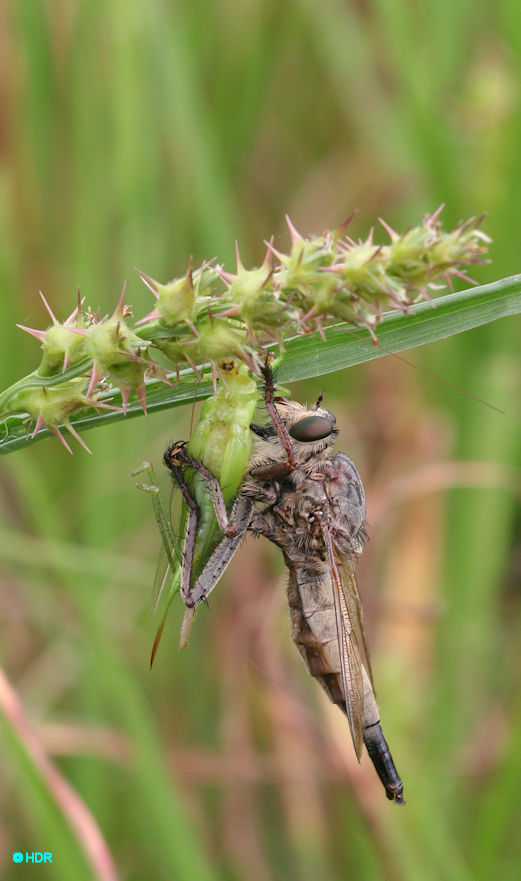
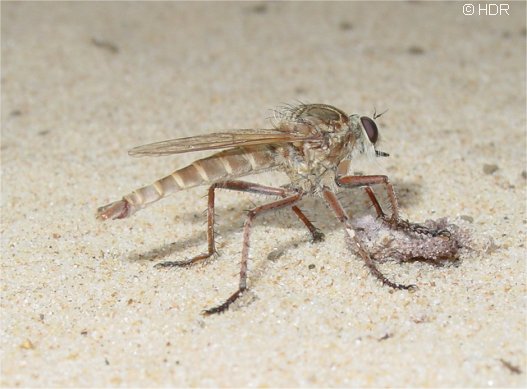
A P. duryi with a katydid kill. Note those impressive hopper antennae shooting off to the left. This was taken on the sand flats at the river as well. |
|
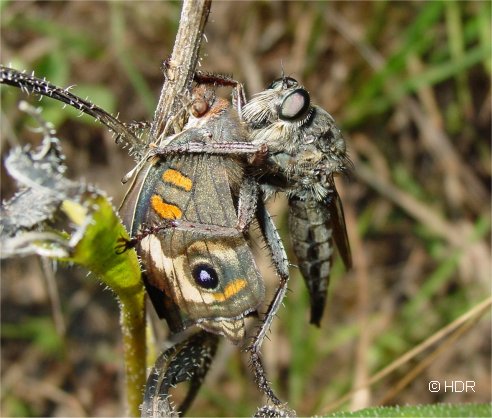
The late summer marauder of the genus. Proctacanthus milbertii seems to linger well into fall and loves butterflies. This Buckeye is a large kill. Note those long purple-tinged legs and the heavy cream or white beard on this widespread robber. |
|
|
|
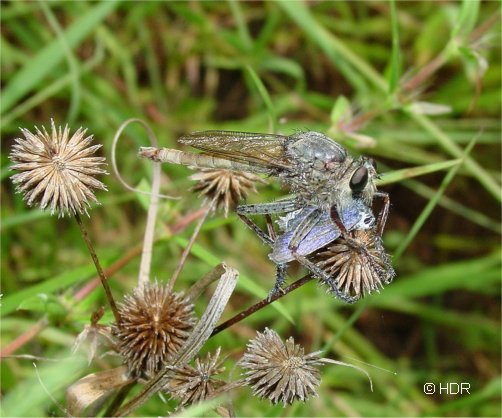
Another P. milbertii with an Eastern Tailed-Blue. Note the long slender and pale abdomen similar to the P. duryi. |
|
|
|
P. milbertii female with some egglaying and an extended wing. This species seems to just barely place the eggs onto the soil as opposed to the sandy species below which back down into the sand with their genitalia. |
|
|
|
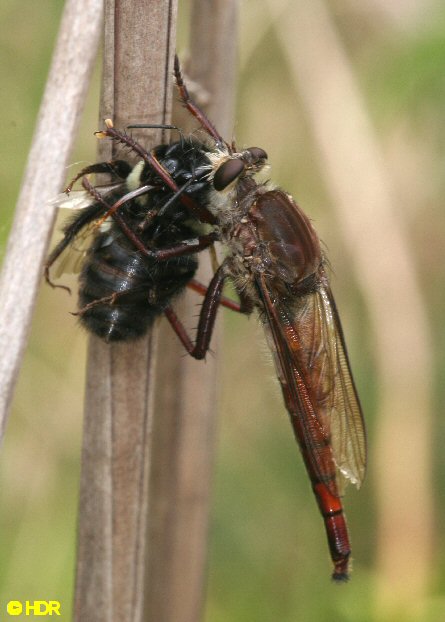
This female has taken a nice stinkbug. I thought they only ate butterflies for awhile. But I saw a male take a huge grasshopper this day as well. Like most, they are opportunists and nothing apparently tastes bad. The small flies on the back of the robber and on the kill are likely parasitic species. |
|
|
|
P. hinei male from Toadsuck beach that still did not allow very close approach. Very fine beach robbers. Note the wider genitalia terminally on this male. Very close in habits and appearance to the above P. rufus. This species may prefer larger and/or dirtier waterways. Always hard to approach on the open sand. |
|
|
|
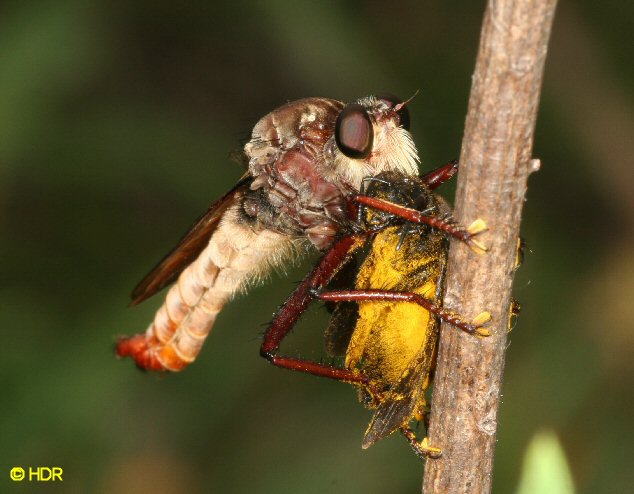
P. hinei male from Holla Bend in 2006 with an impressively pollinated bee. These take large game for robbers. |
|
|
|
P. hinei female from Holla Bend. There were several males flying around but I could not catch one. This female flew several times before allowing this shot. I don't believe I had ever seen a female at the Toadsuck site. Very similar to the female Proctacanthus rufus. |
|
|
|
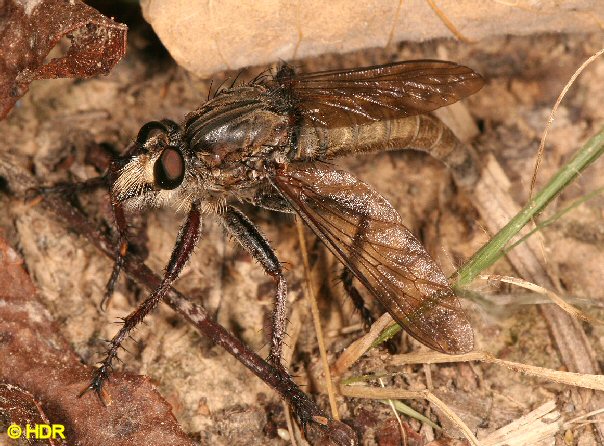
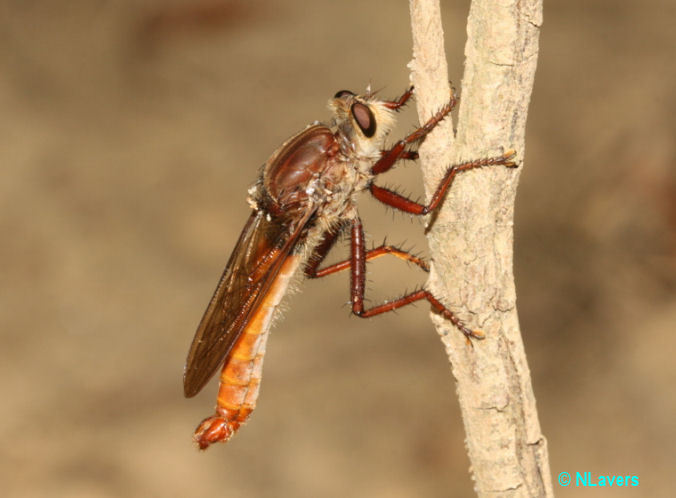
A monster robber fly. It popped up in Georgia near the big Okee Swamp refuge. Kept buzzing and perching on the split rail fences and pines. Over 35 mm long, this is Proctacanthus heros. Taken in Georgia by P. W. Fattig in his long study as well. It has not yet been recorded in Arkansas but may occur in the southeastern or eastern part of the state. |