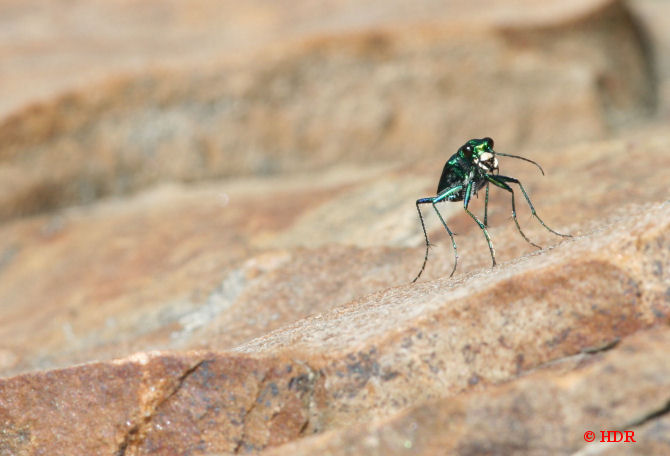
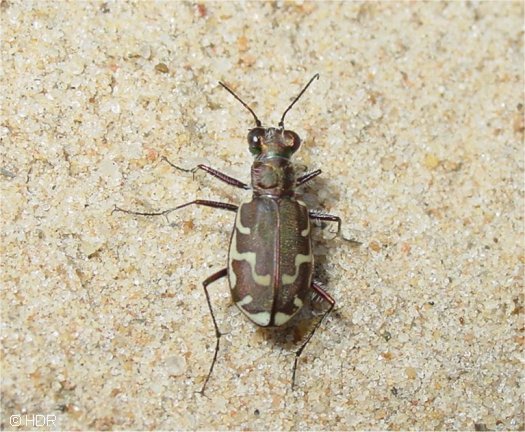
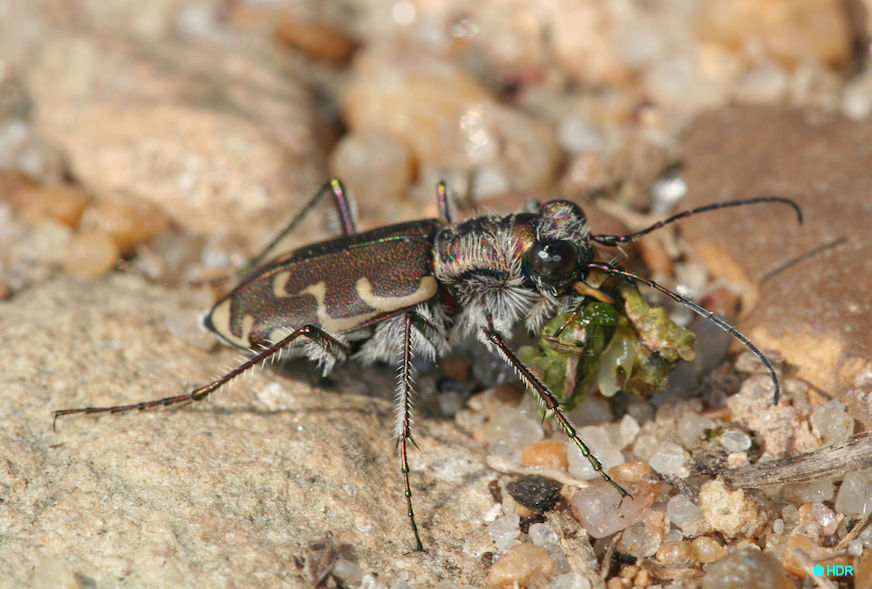
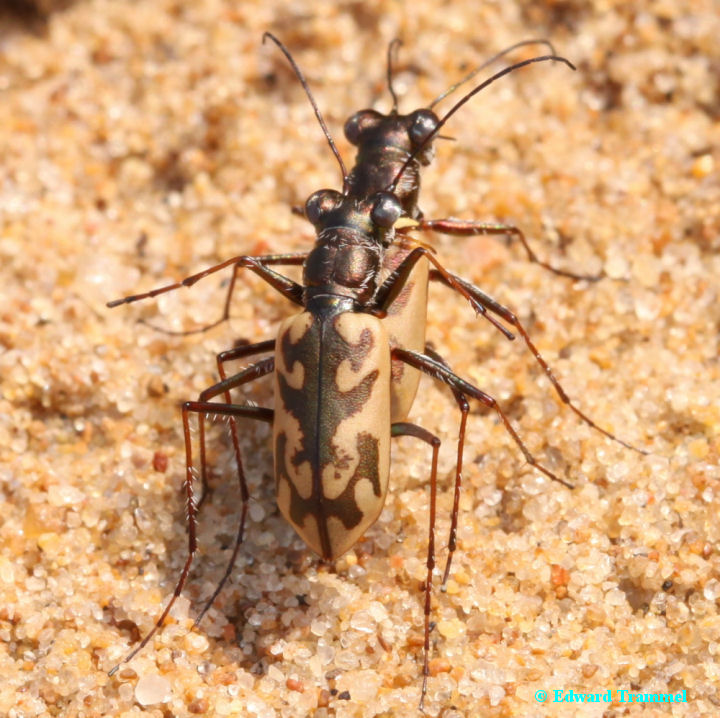
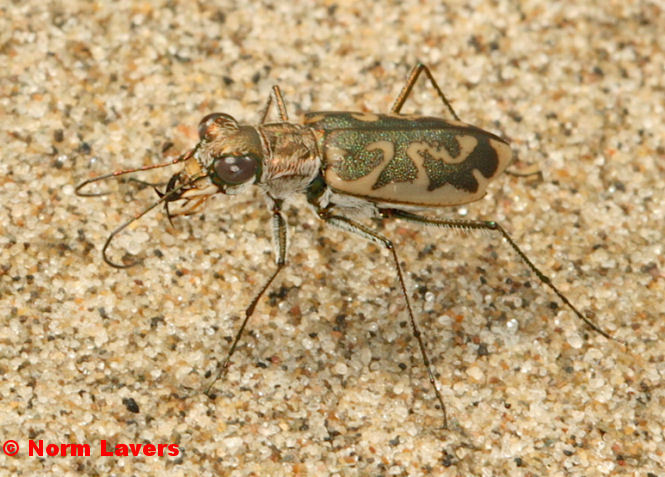
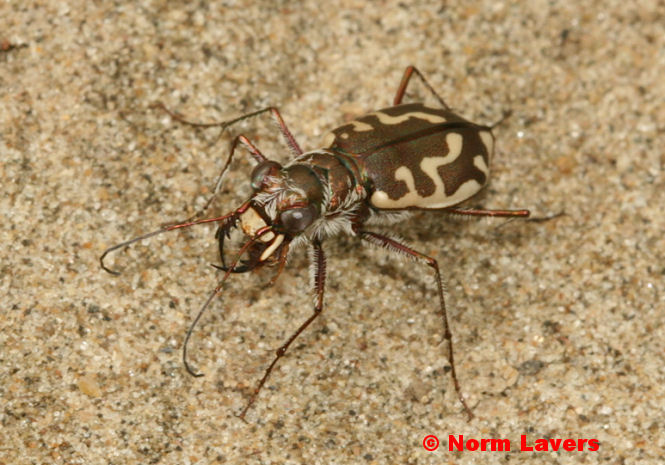
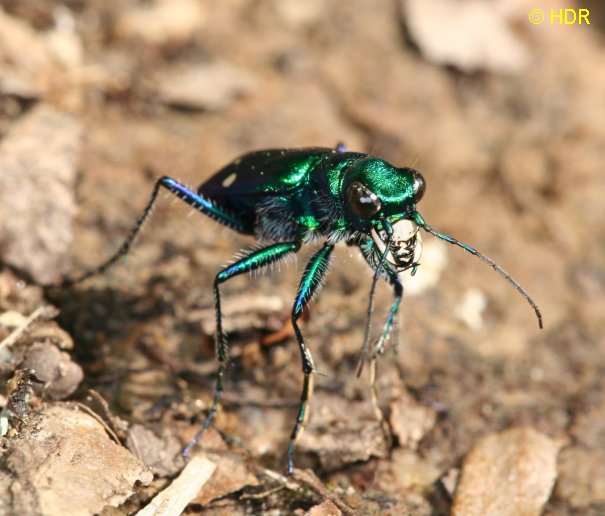
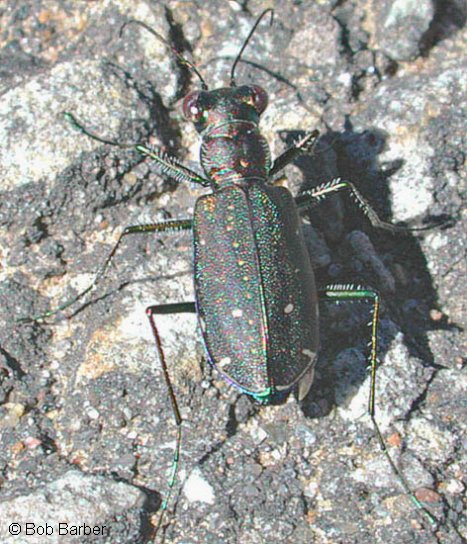
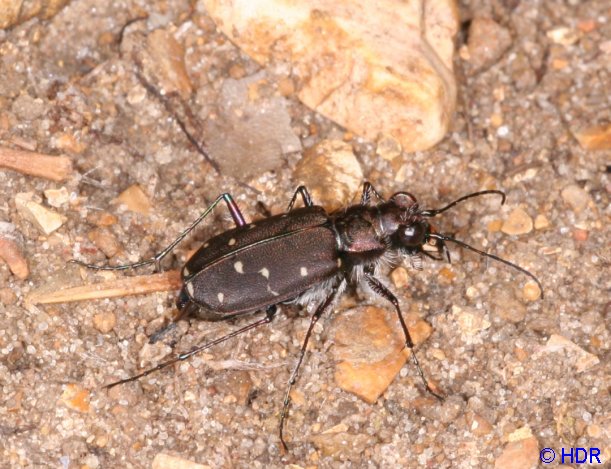
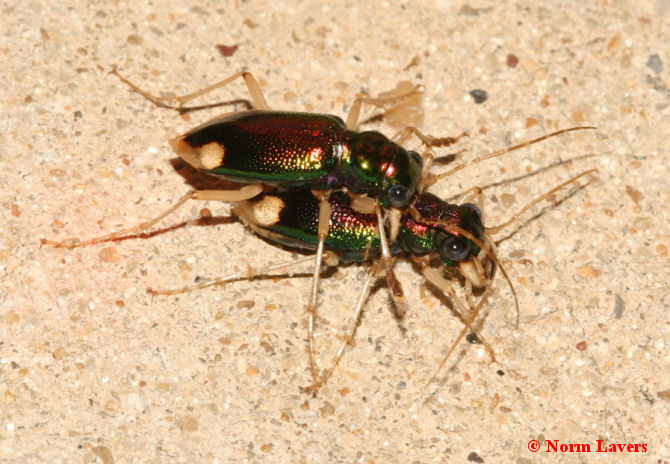
Tiger Beetles are a fairly distinctive beetle group of attacking ground predators. I find them often when looking for small robber flies. Especially common on sandy habitat with Stichopogon robbers. The tigers and robbers seem to be tolerant of each other. I've never seen one eating or attacking the other so far. This tiger above is Cicindela repanda, the Common Shore Tiger. (For a fine Tiger experience try this Nebraska website.)

And for some astounding dorsal scans:

http://www.ndsu.nodak.edu/ndsu/beauzay/tigerbeetles/Photos.htm

Range maps of the North American species: http://www.bio.ic.ac.uk/research/tigerb/rangepaper.htm#anchor602971


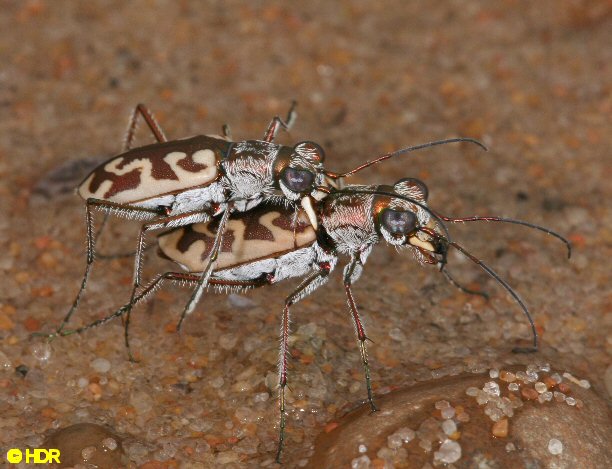
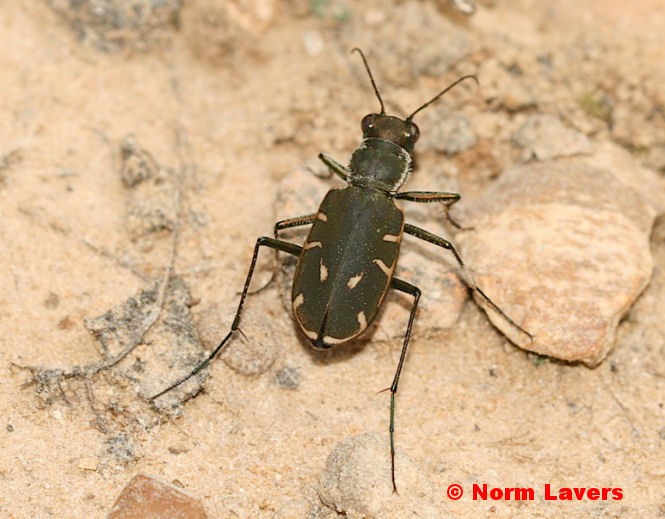
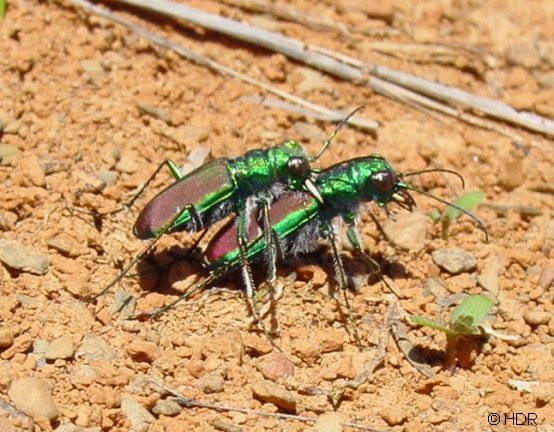
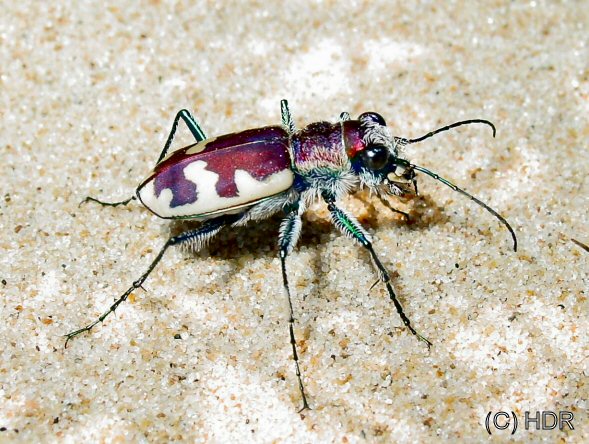
Species often can be determined by the pattern and extent of their dorsal markings. This is a breeding pair of C. cuprascens. Note the similar pattern to C. repanda. They are both found on sandy river shorelines. These were at Holla Bend. Tigers come in an impressive array of colors including quite a few iridescent species. Some species colors vary by soil and geography and the markings on a specific local population can vary significantly as well. The Nebraska site lists thirty species for that state. Arkansas has twenty species (one not yet documented but so close to the borders I can't stand it). There are about 107 species in the US and Canada. The Arkansas list with linked images (many to the North Dakota scans at site above) is here.

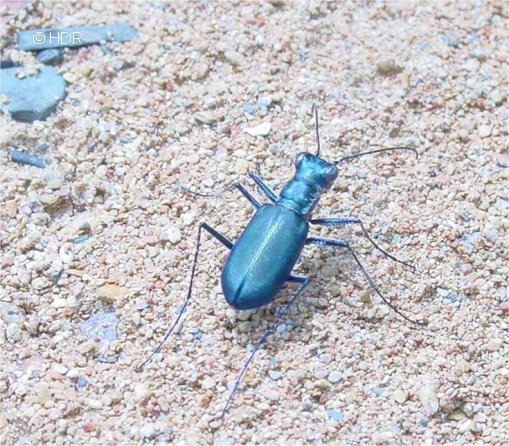
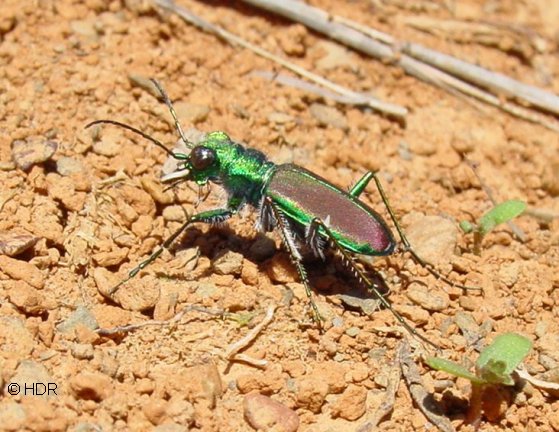
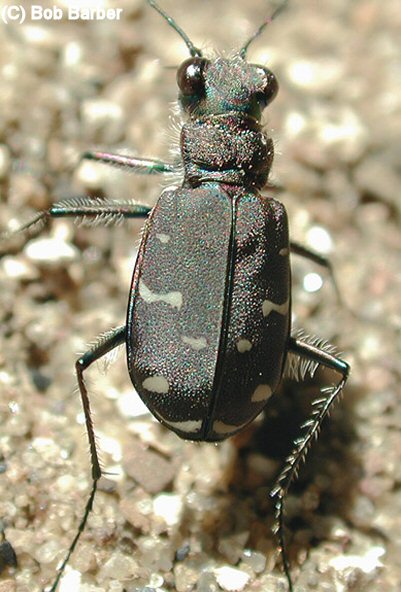
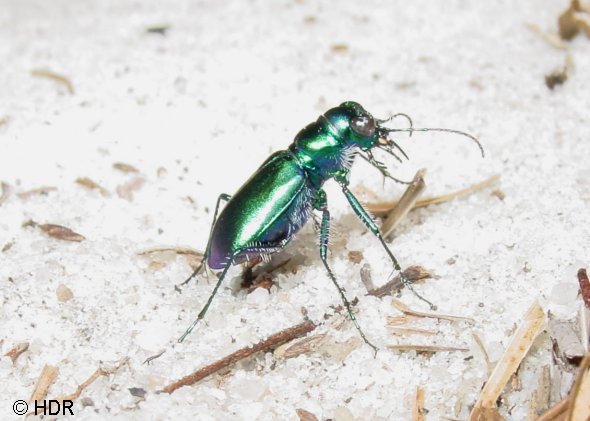
I believe this is C. rufiventris (see side shot far below). It is one of the blue or green species and these are often lacking in other markings until viewed closely. This species usually has a group of six spots around the back edges. C. punctulata will occur anywhere. C. sexguttata prefers the woods. Just below is a more typically marked local C. sexguttata from Bell Slough.

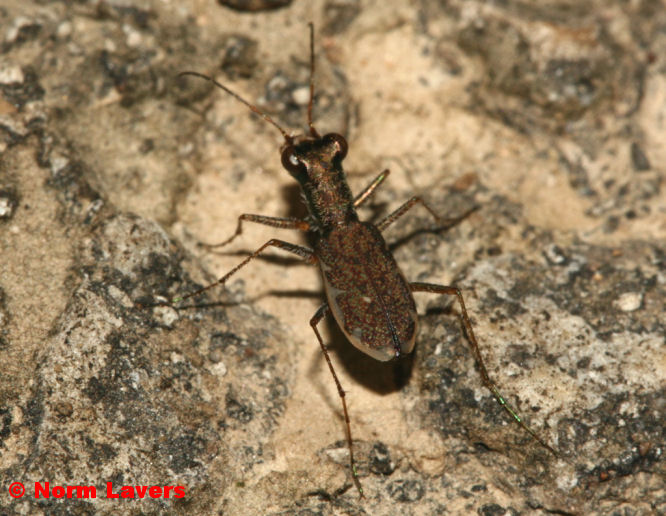
This lovely Tiger is Cicindela obsoleta vulturina in a shot from Calico Rock by Steve Spomer, one of the Nebraska Tiger site guys. This may be the only place it occurs in Arkansas in a population that may be isolated and restricted to north Arkansas and southern Missouri. It lives among the rocky glades there in Calico Rock. It is much blacker and more marked than the normal C. obsoleta and may be a separate subspecies distinct even from vulturina.

This spring tiger is apparently Cicindela splendida, though it has very poorly developed white markings on that red back. You can see one white slash above that third knee. See the Nebraska image of C. splendida for a more normal form. These guys often pop out very early in the spring or even in late winter. This group was located on 2 March 2004 on a warm day of about 65 degrees.

Tiger beetle action. Ahem. Same species as above. I am assuming the larger female is on the ground. She was in charge of where they looked and where they went. (Top to bottom the world is the same.) I love those bone white graspers that the male is holding her with.

Fairly common Tiger in an uncommonly nice shot. Cicindela punctulata, otherwise known as the Sidewalk Tiger Beetle, shows the puncta which have a gilded appearance. A Bob Barber shot.

The fall Tiger, a true Cincindella rufiventris, exposing his rufus ventris so to speak. The orange abdominal color is not always visible.

The Big Sand Tiger, Cicindella formosa, from Toadsuck's sand shore again. Much less common than the repanda and tends to stay up on the higher and drier sands. About 30 percent larger than the average repanda.

Cicindella duodecimguttata, a more northerly distributed Tiger in Arkansas and likely only in the Ozark counties. Bob shot this one in late summer. Could be mistaken for a C. repanda and this one occurred with repanda, making for some work on Bob's part. Likely much less common than repanda, but what isn't. Another from Sharp county below which was also hanging out with C. repanda.

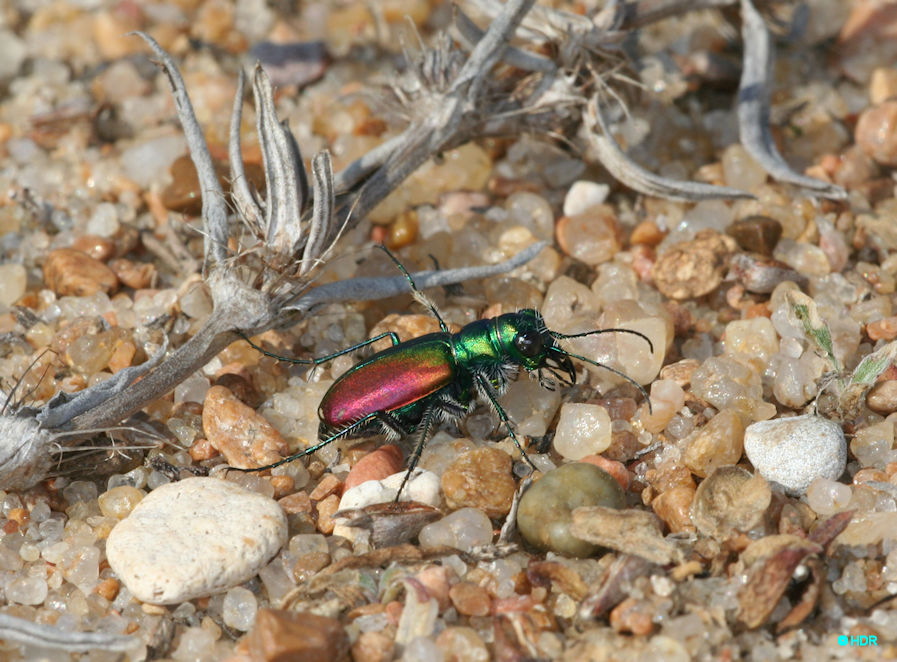
Cicindella scutellaris unicolor, from Florida. Was ranging the powdery sand near an inland pond hunting ants. There were some green and some blue-green and some with purpled overtones. Very nice creatures indeed. The scutellaris lecontei subspecies in Arkansas has significant white borderings. See a C. scutellaris picture group here:

http://www.ndsu.nodak.edu/ndsu/beauzay/tigerbeetles/Cicindela_scutellaris.htm

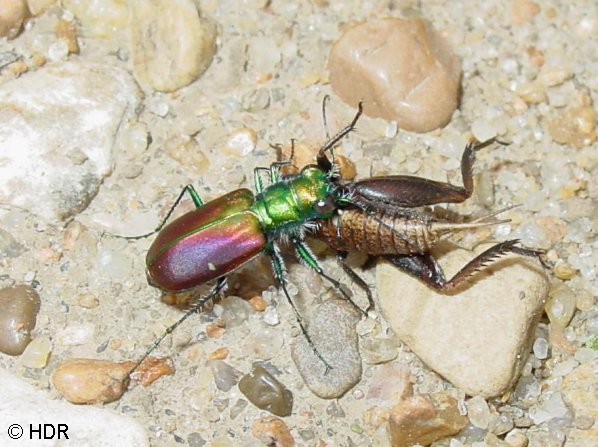
Interesting food choice, no? Definitely. And I believe this is another of our own local subspecies of C. scutellaris scutellaris. Significantly more colorful. This female did not take the cricket on her own. She actually stole it from a passing cricket-hunting wasp (a Tachytes) that was barely big enough to carry the cricket. There were several wasps in this sandy area. The Tigers were linked up in mating and this female grabbed the cricket while still in coitus and then she shook the male off. (Oh, the pain, the pain.)