|
|
|
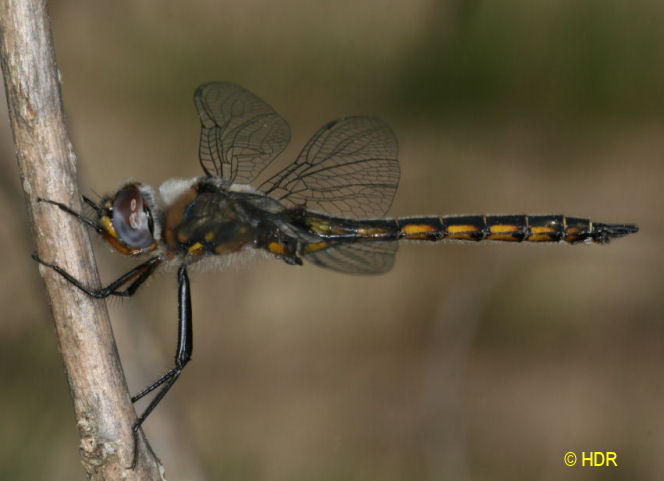
Common Baskettail Epitheca cynosura Arkansas has five proven Baskettail species. They can't be trusted should sum up the status. And photos are very hard to trust. They are in the Emerald family Corduliidae but look nothing like the other emeralds. This species and the Slender (previously Stripe-winged) are the difficult identification pair though the body shape and wing markings can often separate them. Dennis Paulson thinks they can all be separated by abdominal features of shape and size. This female Common has the reduced dark marking at the bases of the hindwings. Males sometimes have an extensive triangle of black. The Slender almost never has more black than this female and often much less. The body shape of the Common makes it look wide from stem to tip. The Slender appears slimmer and has a narrowing toward the top of the abdomen. And note this fine treatment from Abbott of the Texas species. These baskets fly in spring and often in swarms. They have a characteristic bouncy flight and when they land often cock themselves at an angle such as the one in the photo above. They love mosquitoes and will often fly close to a mosquito-swarmed human and clean up the little bloodsuckers as though it is what they were born to do. |
|
Another female and the Buckeye blooms that are not quite open are a sure sign of the early spring season. This looks posed but she flew up to the flower on her own and folded her wings for me. Some days the world works right. |
|
|
|
Close up, male terminus of a strongly marked Common from 2008. Apparently the terminus on Common and Mantled are extremely close. But distinct from the Slender. |
|
|
|
From Ouachita county in April a male that is likely a Common with very little wing marking. Was flying with female Common's. |
|
|
|
Mantled Baskettail Epitheca semiaquea Compare the above with this female which is from my property on Round Mountain in April 2008. I thought she looked slightly wider bodied. Dennis Paulson believes this is the Mantled Baskettail and this is the commonest form for our area. And they are variable in extent of wing darkening in several eastern areas. The Common rarely has this much coloration but the body width and the absence of an indentation of any kind at segment 3 are the details to look for. |
|
|
|
Compare with this female also taken in the same week on my property. This is the female Common on my creek. With the much reduced wing darkening. Note the slight change at segment three. I have not taken a Slender on the property as of this shot. |